
How to Choose the Right Color Temperature for LED Lights
Introduction
Wrong color temperature can make your home feel cold or overly warm. In 2026, Indian homeowners struggle with choosing between 2700K cozy glow and 6500K daylight brightness. Color temperature in Kelvin (K) determines light’s warmth or coolness, dramatically affecting mood, productivity, and even food appearance in kitchens. This guide breaks down the science, provides room-by-room recommendations, and shares India-specific insights to help you select perfect LED lighting.
Table of Contents
- What Is Color Temperature in LED Lights?
- Complete LED Color Temperature Chart (Kelvin Guide)
- Room-by-Room Color Temperature Guide
- Step-by-Step Guide to Choosing LED Color Temperature
- India-Specific LED Color Temperature Trends 2026
- Common Mistakes & How to Avoid Them
- PAA Questions
- FAQs
- 10-Point Summary
- Final Conclusion
- CTA Section
- Keyword List
- Schema Markup
What Is Color Temperature in LED Lights?
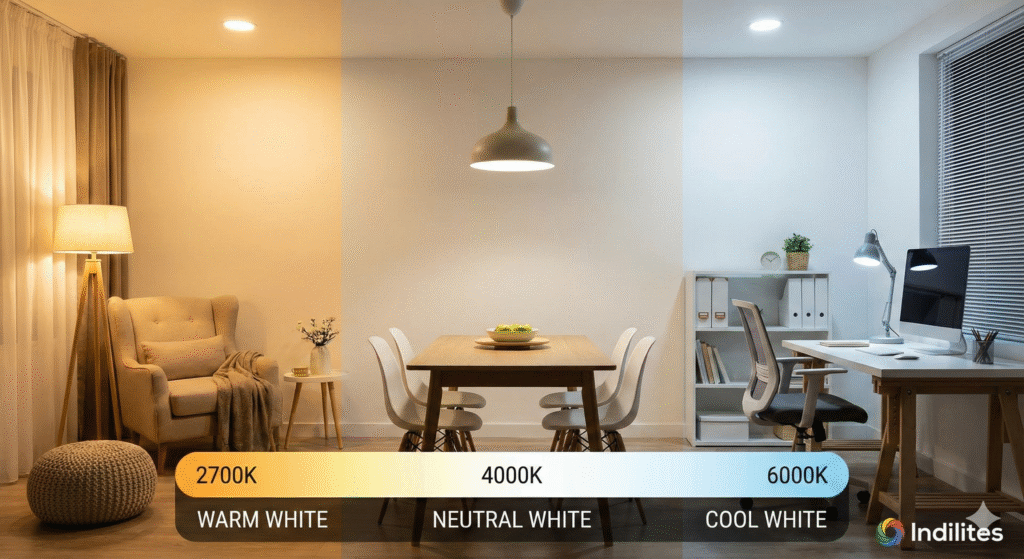
Color temperature measures light’s warmth or coolness in Kelvin (K). Lower Kelvin = warmer (yellow/orange), higher Kelvin = cooler (blue/white).
2700K = Candlelight warmth
3000K = Incandescent cozy
4000K = Neutral daylight
5000K = Cool office light
6500K = Pure daylight
Pro Tip:
Match room function to Kelvin: kitchens need 4000K+, bedrooms prefer 2700K.
Complete LED Color Temperature Chart (Kelvin Guide)
| Kelvin Range | Color Name | Best For | CRI Impact | India Usage |
| 2200K-2700K | Extra Warm White | Bedrooms, Living Rooms | High (90+) | Diwali decor |
| 2700K-3000K | Warm White | Dining, Guest Rooms | High (85+) | Traditional homes |
| 3500K-4100K | Neutral White | Kitchens, Study | Medium (80+) | Modern apartments |
| 5000K-6500K | Cool/Daylight White | Offices, Bathrooms | Medium (75+) | Commercial spaces |
Room-by-Room Color Temperature Guide
Kitchens: 3500K-4000K (Neutral white prevents food looking grey)
Living Rooms: 2700K-3000K (Cozy family gatherings)
Bedrooms: 2200K-2700K (Sleep-friendly warmth)
Bathrooms: 4000K-5000K (Accurate skin/makeup lighting)
Study/Office: 4000K-5000K (Focus & productivity)
India Insight:
Mumbai apartments favor 3000K living rooms blending traditional warmth with modern style.
Step-by-Step Guide to Choosing LED Color Temperature
- Identify Room Function: Cooking? Relaxing? Working?
- Test Samples: Buy 3-5W bulbs in different Kelvin to test
- Check CRI Rating: Minimum 80+ for accurate colors
- Consider Mixed Use: Use dimmable LEDs or multiple circuits
- Match Existing Decor: Warm tones pair with wood, cool with white/modern
- Future-Proof: Choose tunable white smart LEDs
Data Point:
82% Indian consumers prefer 2700K-4000K range (2024 lighting survey).
Common Mistakes & How to Avoid Them
❌ Kitchen 2700K: Food looks unappetizing
✅ Solution: 3500K+ task lighting
❌ Office 6500K: Causes eye strain
✅ Solution: 4000K neutral white
❌ Bedroom 5000K: Disrupts melatonin
✅ Solution: 2200K-2700K night lighting
Data Point:
Wrong color temperature increases eye fatigue by 35% (lighting research).
PAA Questions
Q: What color temperature is best for LED lights?
A: Best color temperature depends on room use: 2700K bedrooms (warm), 4000K offices/kitchens (neutral), 5000K+ workspaces (cool). Match Kelvin to function.
Q: What is the difference between warm white and cool white LED lights?
A: Warm white (2700K-3000K) creates cozy atmosphere, cool white (4000K-6500K) provides crisp, bright light. Warm for living spaces, cool for work areas.
Q: What color temperature is best for kitchen LED lights?
A: 3500K-4000K neutral white is best for kitchens. Prevents food looking grey, provides accurate color rendering for cooking and food presentation.
Q: What is a good color temperature for bedroom LED lights?
A: 2200K-2700K extra warm white is ideal for bedrooms. Promotes relaxation, supports melatonin production, and creates sleep-friendly atmosphere.
Q: How do I choose the right color temperature for LED lights?
A: Consider room function: warm (2700K) for relaxation, neutral (4000K) for work/cooking, cool (5000K+) for detailed tasks. Test samples first.
Q: What does color temperature mean for LED lights?
A: Color temperature (Kelvin) measures light warmth: lower K = warmer/yellow, higher K = cooler/blue-white. 2700K candle-like, 6500K daylight.
Q: What color temperature is best for living room LED lights?
A: 2700K-3000K warm white creates inviting living room atmosphere perfect for family gatherings, TV viewing, and relaxation.
Q: What is CRI and how does it relate to color temperature?
A: CRI (Color Rendering Index) measures color accuracy (0-100). Higher CRI needed at all temperatures. 80+ CRI recommended for homes.
Q: Can I mix different color temperatures in one room?
A: Yes, layer lighting: warm ambient (2700K), neutral task (4000K), cool accent (5000K). Use dimmers to balance.
Q: What color temperature is best for office LED lighting?
A: 4000K neutral white optimizes office productivity, reduces eye strain, and provides accurate color rendering for documents/screens.
Q: What is 4000K color temperature like?
A: 4000K neutral white mimics natural daylight without glare. Perfect for kitchens, offices, study rooms balancing warmth and brightness.
Q: What does 3000K LED light look like?
A: 3000K warm white resembles traditional incandescent bulbs. Cozy for living rooms, dining areas, bedrooms without being too yellow.
Q: Is 5000K good for bedroom?
A: No. 5000K cool white disrupts sleep cycles. Use 2700K for main lighting, 5000K only for reading/walk-in closets if needed.
Q: What Kelvin is daylight?
A: Natural daylight ranges 5000K-6500K. 5000K morning light, 6500K midday sun. Use for workspaces requiring color accuracy.
FAQs
Q: Should I buy all LED lights same color temperature?
A: No. Different rooms need different Kelvin. Kitchen 4000K, bedroom 2700K, office 4000K. Consistent within same room recommended.
Q: How do I test LED color temperature before buying?
A: Purchase sample bulbs (5W each) from 3 Kelvin ranges. Test in actual space during day/night. Return unneeded ones.
Q: Does color temperature affect electricity bill?
A: No. Wattage determines energy use, not Kelvin. 9W 2700K bulb = 9W 4000K bulb energy consumption.
Q: Can I change LED color temperature later?
A: Yes, with tunable white smart bulbs or replaceable LED modules. Philips Hue, WiZ offer adjustable 2200K-6500K range.
Q: What CRI rating should Indian homes target?
A: CRI 80+ minimum, 90+ premium. Kitchen/bathroom needs 85+ for food/skin tone accuracy. Living room 80+ sufficient.
Q: Do color temperatures affect mood/health?
A: Yes. Warm light (<3000K) promotes relaxation/melatonin. Cool light (>4000K) boosts alertness. Bedroom warm, office cool.
Q: What’s difference between tunable white vs RGB LED lights?
A: Tunable white adjusts Kelvin (2200K-6500K). RGB adds colors. Both useful but tunable white better for daily functional lighting.
Q: How does wall/floor color affect LED light appearance?
A: Light walls reflect/amplify light. Dark walls absorb. Beige walls + 3000K = warmer effect. White walls + 4000K = brighter.
Q: Are Indian LED brands reliable for color temperature?
A: Yes. Syska, Havells, Indilites maintain ±100K accuracy. Check BIS certification and third-party lab testing certificates.
Q: Can dimming change LED color temperature?
A: Standard LEDs shift warmer when dimmed. Smart “warm dim” LEDs maintain consistent Kelvin while dimming for natural effect.
10-Point Summary
- 2700K: Bedrooms, living rooms (warm cozy)
- 3000K: Dining areas (inviting family)
- 4000K: Kitchens, offices (functional neutral)
- 5000K: Workspaces, bathrooms (crisp accurate)
- CRI 80+: Essential for color accuracy
- Test samples: Always buy/test before bulk
- Dimmable LEDs: Natural brightness adjustment
- Smart tunable: Future-proof investment
- Match decor: Walls/floors affect perception
- India standard: 3000K-4000K most popular
Final Conclusion
Choosing the right color temperature transforms spaces from uncomfortable to perfect. Match Kelvin to room function—2700K bedrooms, 4000K kitchens/offices, 5000K workspaces. Test samples, prioritize CRI 80+, and consider smart tunable options for flexibility. Perfect lighting saves energy, boosts mood, and enhances every room.
CTA
Ready to perfect your home lighting? Get free color temperature samples from Indilites + expert consultation. Order your test kit today and find your perfect Kelvin match!
Keyword List
Primary: LED color temperature, color temperature for LED lights, best color temperature LED, LED light color temperature guide, Kelvin temperature LED
Secondary: warm white LED, cool white LED, neutral white LED, 4000K LED, 2700K LED
Long-tail: how to choose LED color temperature for home India, best color temperature for kitchen LED lights, LED color temperature chart India 2026, bedroom LED light color temperature