
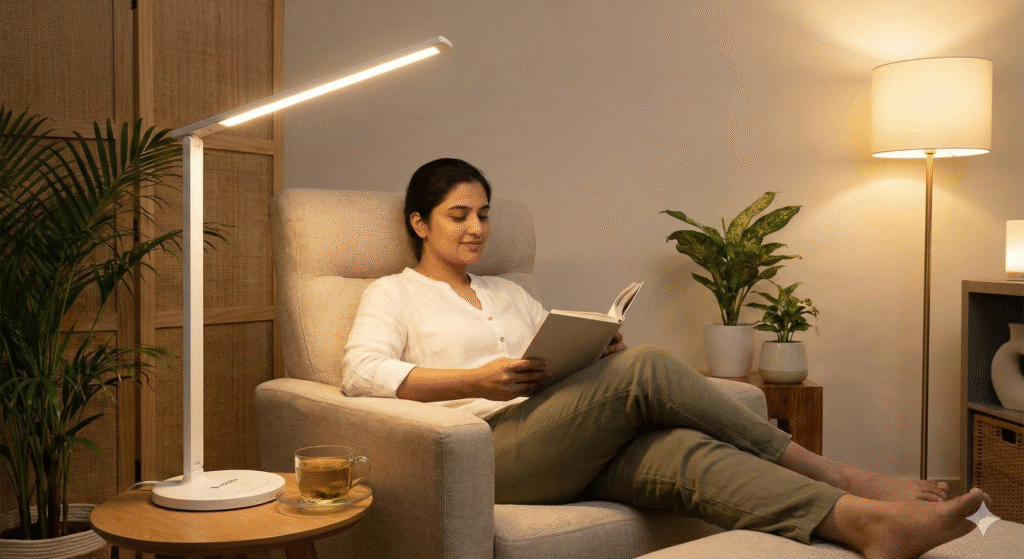
The Impact of LED Lighting on Health and Well-being
Lighting is no longer just about visibility—it’s about human health, mental well-being, productivity, and lifestyle quality.
In 2026, LED lighting plays a critical role in how we sleep, work, heal, and perform, especially with the rise of smart LEDs, human-centric lighting, and wellness-focused designs.
From Indian homes and offices to hospitals, schools, and smart cities, LED lighting is shaping biological rhythms and emotional health like never before. But is LED lighting truly healthy? And how can it be used correctly?
This blog explores the scientific, practical, and real-world impact of LED lighting on health and well-being in 2026—with clear guidance for individuals, businesses, and decision-makers.
Table of Contents
- What Is the Relationship Between LED Lighting and Health?
- How LED Lighting Affects the Human Body
- LED Lighting and Circadian Rhythm Explained
- Impact of LED Lighting on Eye Health
- LED Lighting and Mental Well-Being
- Human-Centric Lighting (HCL): 2026 Breakthrough
- LED Lighting in Homes, Offices & Hospitals (India)
- Comparing Traditional Lighting vs LED (Health View)
- How to Choose Health-Friendly LED Lighting
- Pro Tips for Using LED Lighting Safely
What Is the Relationship Between LED Lighting and Health?
Featured Snippet Definition:
LED lighting affects human health by influencing sleep cycles, hormone production, eye comfort, mood, and productivity through light intensity, color temperature, and timing.
Unlike traditional bulbs, LEDs allow precise control over brightness and spectrum, making them powerful tools for health—when used correctly.
How LED Lighting Affects the Human Body
LED lighting impacts health mainly through:
- Melatonin suppression
- Circadian rhythm regulation
- Visual comfort
- Cognitive performance
- Emotional balance
Blue-rich light enhances alertness, while warm light supports relaxation. In 2026, improper lighting design is recognized as a silent health risk.
LED Lighting and Circadian Rhythm Explained
The circadian rhythm is the body’s internal 24-hour clock.
How LEDs Influence It:
- Cool white LEDs (5000K–6500K) → Boost alertness
- Warm LEDs (2700K–3000K) → Promote sleep
- Tunable LEDs → Mimic natural daylight cycles
India Insight (2025–26):
Indian IT offices adopting circadian LED systems reported better sleep quality and reduced burnout among employees.
Impact of LED Lighting on Eye Health
Benefits:
- Reduced flicker (quality LEDs)
- Uniform illumination
- Lower glare (UGR-rated fixtures)
Risks (if poorly designed):
- Eye strain
- Headaches
- Digital fatigue
Best Practice:
Use flicker-free, low-blue-light certified LEDs, especially in workspaces and classrooms.
LED Lighting and Mental Well-Being
Lighting strongly influences mood and emotions.
Positive Impacts:
- Reduced stress
- Improved focus
- Enhanced emotional stability
In hospitals and wellness centers across India, LED lighting is now used to reduce anxiety and speed recovery.
Human-Centric Lighting (HCL): 2026 Breakthrough
Human-Centric Lighting aligns artificial light with human biological needs.
HCL Features:
- Dynamic color temperature
- Automated brightness control
- Time-based lighting scenes
2026 Trend:
HCL adoption is growing in:
- Corporate offices
- Luxury homes
- Healthcare facilities
- Educational institutions
🔶 PRO TIPS BOX: Health-Optimized LED Lighting
- Use warm LEDs after sunset
- Avoid high-blue light in bedrooms
- Choose CRI 90+ for natural visuals
- Install dimmers & smart controls
- Match lighting to activity, not aesthetics
LED Lighting in Homes, Offices & Hospitals (India)
Homes:
- Better sleep quality
- Reduced eye strain
- Energy savings
Offices:
- Higher productivity
- Lower fatigue
- Improved focus
Hospitals:
- Faster patient recovery
- Reduced stress
- Better staff efficiency
Traditional Lighting vs LED (Health Comparison)
| Factor | Traditional Lighting | LED Lighting |
| Flicker | High | Very Low |
| Control | Limited | Advanced |
| Eye Comfort | Moderate | High |
| Energy Impact | High | Low |
| Health Customization | No | Yes |
How to Choose Health-Friendly LED Lighting (Step-by-Step)
- Select correct color temperature
- Ensure flicker-free certification
- Choose high CRI (≥90)
- Use smart or dimmable LEDs
- Match lighting to purpose
Quick Bullet Points for Skimming
- LED lighting affects sleep, mood & productivity
- Blue light timing matters more than brightness
- Smart LEDs improve mental well-being
- Human-centric lighting is a 2026 standard
- Poor LED quality can harm eye health
People Also Ask
1. Is LED lighting safe for human eyes?
Yes, high-quality LED lighting is safe when flicker-free and properly designed. Poor-quality LEDs may cause eye strain due to glare or excessive blue light exposure.
2. Does LED lighting affect sleep?
Yes. Blue-rich LED light can suppress melatonin and disturb sleep if used at night. Warm LEDs help maintain healthy sleep cycles.
3. Can LED lighting improve productivity?
Absolutely. Cool white LED lighting enhances alertness and focus, especially in offices and work environments.
4. Is LED lighting better than tube lights for health?
Yes. LEDs offer better control, lower flicker, and customizable color temperatures, making them healthier than traditional tube lights.
5. What color LED light is best for eyes?
Neutral white (4000K) is best for eyes during work, while warm white (2700K–3000K) is ideal for relaxation.
6. Are smart LED lights healthier?
Smart LEDs allow circadian alignment, reducing eye strain and improving mental well-being through adaptive lighting.
7. Does LED lighting cause headaches?
Only poorly designed or flickering LEDs can cause headaches. Quality LEDs with proper diffusion do not.
8. How does LED lighting affect mental health?
Proper LED lighting reduces stress, improves mood, and supports emotional balance, especially in workplaces.
9. Is LED lighting used in hospitals?
Yes. Hospitals use LED lighting to improve patient recovery and reduce staff fatigue.
10. Can LED lighting reduce stress?
Yes. Warm and indirect LED lighting helps create calming environments.
11. Is blue light from LEDs harmful?
Excessive blue light at night can be harmful. Controlled exposure during daytime is beneficial.
12. What is human-centric lighting?
Human-centric lighting adapts light to human biological needs, improving health and well-being.
FAQs
- Which LED lighting is best for bedrooms in India?
- Can LED lights cause long-term eye damage?
- What certifications ensure safe LED lighting?
- Are LEDs suitable for children’s study rooms?
- How does lighting affect mental fatigue?
- Is warm light always healthier than cool light?
- Can businesses use lighting to improve employee health?
- How often should LED lighting be upgraded?
Final Conclusion
In 2026, LED lighting is no longer just an energy-saving solution—it is a health and well-being tool. When designed thoughtfully, LED lighting improves sleep, productivity, emotional balance, and visual comfort across homes, offices, and public spaces.
The future belongs to human-centric, smart, and wellness-focused lighting solutions.
CTA
Looking to implement health-optimized LED lighting for homes, offices, hospitals, or commercial projects?
📩 Email: info@indilites.in
📞 Call: +91 7977511932
🌐 Website: https://indilites.in/
Partner with Indilites for advanced LED solutions, dealer opportunities, and large-scale lighting projects across India.
Keyword List (SEO)
Primary Keywords
- LED lighting health impact
- LED lighting and well-being
- LED lighting 2026
Secondary Keywords
- Human centric lighting
- Smart LED lighting
- LED lighting eye health
- LED lighting circadian rhythm
Long-Tail Keywords
- Is LED lighting good for health
- Effects of LED lighting on sleep
- Best LED lighting for mental well-being
- Health benefits of LED lights in India
10-Point Summary
- LED lighting impacts sleep and mood
- Blue light timing matters
- Human-centric lighting is key
- Eye safety depends on LED quality
- Smart LEDs enhance wellness
- Offices benefit from adaptive lighting
- Hospitals use LEDs for recovery
- Warm light supports relaxation
- Proper design prevents health risks
- LED lighting is a wellness investment